
When guilt becomes a barrier to moving forward in recovery

Guilt can be a difficult part of recovery. People may look back on missed responsibilities, strained relationships, financial difficulties or things they have said or done that they wish they could change.
Guilt can come from recognising how past experiences have affected themselves and others, and wanting to make positive changes or rebuild relationships. However, when guilt becomes overwhelming it can make moving forward more difficult. Some people may begin to feel that they do not deserve support, forgiveness, or the opportunity for a fresh start.
Recovery does not mean ignoring the past or pretending difficult experiences never happened. It means finding ways to acknowledge what has happened, take steps towards positive change and recognise that past experiences do not have to define who you are or what your future holds.
Why guilt can be especially complex
Alcohol and other drug problems rarely happen in isolation. They can be connected to grief, trauma, mental health challenges, relationship difficulties, housing insecurity, financial stress, family responsibilities and other pressures that affect a person’s wellbeing.
For Aboriginal and Torres Strait Islander people, these challenges can be compounded by the ongoing impacts of colonisation, racism, intergenerational trauma, and social disadvantage. All of these harms can affect social, emotional, and cultural wellbeing, and may contribute to unsafe alcohol and other drug use.
This does not mean every Aboriginal or Torres Strait Islander person has the same experience. Every person, family, and community is different. It does mean that support should look at the whole person rather than reducing someone to their alcohol or drug use.
When does guilt become a problem?
Guilt may be becoming a problem in recovery when it starts to stop you from doing things that could support your wellbeing.
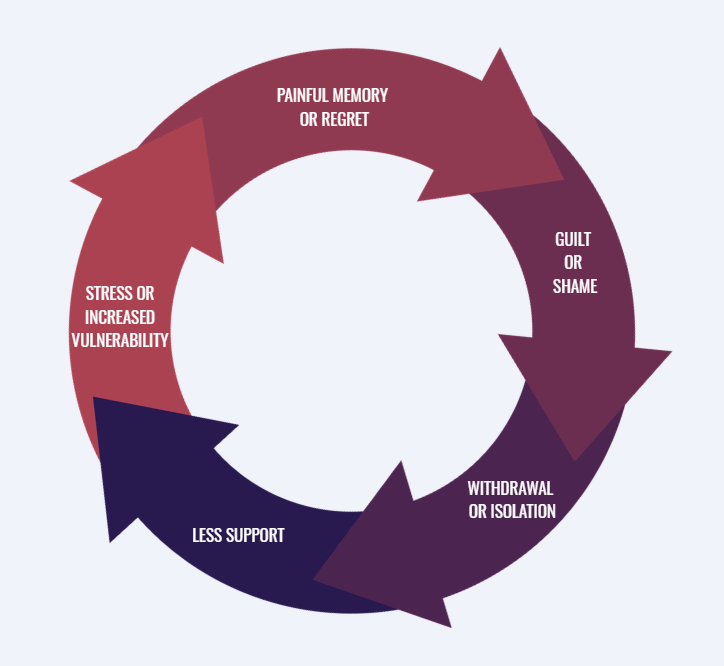
That might look like avoiding counselling because you are embarrassed, staying away from family because you fear judgement, believing you do not deserve another chance, or using alcohol or other drugs to escape painful feelings.
This can create a difficult cycle, but this cycle can be interrupted.
Talking with someone, reconnecting with safe people, dealing with practical problems, and getting culturally safe drug and alcohol support can all create room for a different next step.
When to seek more help
It may be time to seek drug and alcohol support if guilt or shame is leading you to withdraw from family or community, avoid appointments, return repeatedly to alcohol or other drug use, feel unable to cope with everyday responsibilities, or believe you do not deserve support.
You do not need to reach a particular level of crisis before asking for help.
Guilt may tell you that you have to carry everything yourself or that the past has already decided the future. It has not.
Recovery can include accountability, repair, cultural connection, family, professional care and new choices made one step at a time. Culturally safe drug and alcohol support offers respectful, non-judgemental care that considers family, community, Country, mental and physical health, relationships and practical needs.
What moving forward can look like
Moving forward does not require a person to forget what has happened or make everything right at once. Recovery can involve many small steps, and the right steps will be different for each person.
1. Separate responsibility from self-punishment: Taking responsibility may involve acknowledging harm, making changes, seeking treatment or repairing a relationship when it is safe and appropriate. Self-punishment, by contrast, can keep a person stuck in the belief that they deserve suffering.
2. Talk about what is happening rather than carrying it alone: Counselling can create a private space to work through guilt, grief, relationships, trauma and substance use. Group support may also help some people see that difficult feelings are shared by others and do not have to be carried in isolation.
3. Deal with practical pressures: Recovery may involve financial problems, housing stress, legal issues, family conflict or difficulty navigating health and community services. Support with advocacy and referrals can sometimes reduce the practical load while a person works on their wellbeing.
What families and loved ones can do
Family and community support can matter, but supporting someone does not mean taking responsibility for everything they do.
Support can look like listening without humiliation, encouraging professional support, noticing positive steps, and having clear boundaries around behaviour that is unsafe or harmful. It can also mean recognising that recovery may not follow a straight line.
Family members may also need support for their own wellbeing.
Asking for help does not mean giving up on someone. Caring about someone and looking after yourself can happen at the same time.
If alcohol or other drug misuse are affecting your family, contact us for a confidential discussion. Our team can listen, talk through your needs and help connect you with culturally safe support.
How Marrin Weejali can help
At Marrin Weejali, our approach is holistic. We are run by our people, for our people.
We recognise that wellbeing can involve spirit, mind, body, kinship, community, culture and Country.
Many of our staff bring lived experience of addiction, recovery, grief and hardship alongside professional training and experience. We offer a space for people to ask for help without judgement and where support can be shaped around what is happening in their life. Our services are free and you do not need to wait for another organisation to make a referral: people can self-refer.
If guilt is making recovery harder, get in touch to talk about what is happening and what support might be right for you.

© Copyright Marrin Weejali Aboriginal Corporation 2026. All rights reserved. Website by Brilliant Digital.